A Safer Way to Deploy Healthcare AI: Using the Confusion Matrix to Manage Risk

Healthcare AI will make mistakes. The executive challenge is not avoiding errors, but deciding which errors matter, how severe they are, and how they are detected before causing harm. In a HealthAI Collective lightning talk, Daniel Pupius explains how healthcare leaders can use confusion matrix thinking as a practical risk and governance framework to deploy AI safely, redesign workflows, and unlock operational ROI without compromising reliability or compliance.
Key Takeaways
- AI risk management is a governance problem, not a modeling problem
- False positives and false negatives have very different clinical and business consequences
- Constrained use cases unlock safer and faster healthcare automation
- Human in the loop workflows are essential for regulatory readiness
- Operational ROI comes from workflow redesign, not raw model accuracy
Why Healthcare AI Deployment Feels Riskier Than It Is
Healthcare leaders are right to approach AI deployment with caution. Modern AI systems are probabilistic, not deterministic, and mistakes in clinical or operational workflows can lead to delayed care, compliance exposure, or patient harm.
Daniel Pupius, Fractional CTO at Float Health, described a familiar pattern. AI prototypes were easy to build and compelling. Shipping them into production took months. The blocker was not technology. It was stakeholder fear driven by unclear risk.
Executives were asking reasonable questions:
- What happens when the AI is wrong?
- How do we know it failed?
- Who is accountable for the outcome?
Without a shared framework, these questions stall progress.
How the Confusion Matrix Becomes a Healthcare AI Decision Framework
Traditionally, the confusion matrix is used by data scientists to evaluate classification models. Pupius repurposed it as an executive alignment and risk management tool.
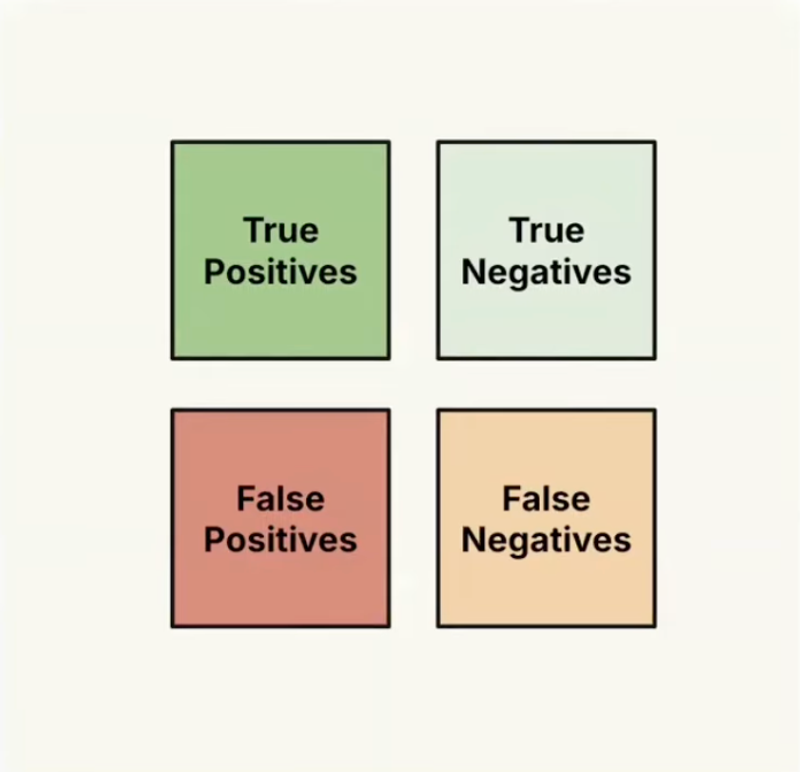
Instead of abstract accuracy metrics, each quadrant is mapped to real operational outcomes.
- True positive: AI processes the referral correctly. Automation succeeds.
- True negative: AI correctly rejects incomplete or invalid inputs, preventing garbage data from entering clinical workflows.
- False positive: AI believes it succeeded but extracted incorrect information. This is the most dangerous failure mode.
- False negative: AI fails to process a valid referral, creating delays or lost revenue.
The executive shift is simple but powerful. Not all errors are equal. Each quadrant carries different clinical, financial, and operational risk.
By explicitly defining severity, likelihood, and downstream mitigations for each outcome, teams move from vague fear to concrete decision-making.
What Is at Stake in Clinical Workflow Automation
At Float Health, referrals arrived through email, phone, and fax due to legacy systems and behavior change challenges. Many were incomplete and relied on tacit human knowledge to interpret.
Errors cascaded quickly. Incorrect data could lead to the wrong nurse, delayed infusions, and potential patient harm.

The opportunity for healthcare automation was obvious. The risk of deploying AI without guardrails was unacceptable.
The confusion matrix made the trade-offs visible.
- False negatives were bad for business but manageable. These referrals could be routed to manual triage.
- False positives initially felt catastrophic. Deeper analysis revealed downstream validation steps that prevented patient impact.
This clarity allowed leadership to approve deployment with confidence.
How Operational ROI Actually Emerges
The most meaningful gains did not come from model sophistication. They came from workflow redesign.
By automating the happy path, Float Health reduced referral staffing time from an average of 20 minutes to roughly 10 seconds. More importantly, operators no longer needed to monitor inboxes in real time.
Work shifted from reactive, synchronous firefighting to asynchronous queues. Staffing utilization improved. Human expertise was reserved for edge cases where judgment mattered.
This is the core lesson for healthcare executives. AI delivers ROI when it reshapes workflows, not when it chases perfection.
Managing False Positives Without Destroying Efficiency
False positives are dangerous because systems treat them as correct. Pupius addressed this by aggressively constraining the use case.
- Required fields were strictly defined
- Optional fields were treated as opportunistic
- Structured outputs reduced hallucinations
- Downstream validation caught subtle errors
- Conservative “critic” agents flagged questionable outputs
Instead of auditing every automated decision, the system focused attention only where risk was highest.
This approach mirrors how high-performing clinical teams already operate.
Why Human in the Loop Is a Feature, Not a Failure
A recurring misconception is that AI must outperform humans in all cases to be valuable. Pupius challenged this directly.
Humans make mistakes more often than most technologists expect. Healthcare already manages this reality through quality control, escalation, and redundancy.
The winning model is AI plus human augmentation.
- AI handles repetitive, high-volume work
- Humans handle ambiguity, judgment, and exceptions
- Escalation paths are explicit, not improvised
This framing increases clinician trust and accelerates adoption.
About the Speaker
Daniel Pupius is a Fractional CTO at Float Health and Product Development Advisor at Product Health, helping startups scale through strong engineering, strategy, and organizational design. A former Staff Software Engineer at Google and Co-founder and CEO of Range, Daniel brings deep expertise in product architecture and leadership. He holds a BSc in Artificial Intelligence from the University of Manchester and an MA in Industrial Design from Sheffield Hallam University.
Watch the Full Talk
Confusion Matrix for Safer Health AI